
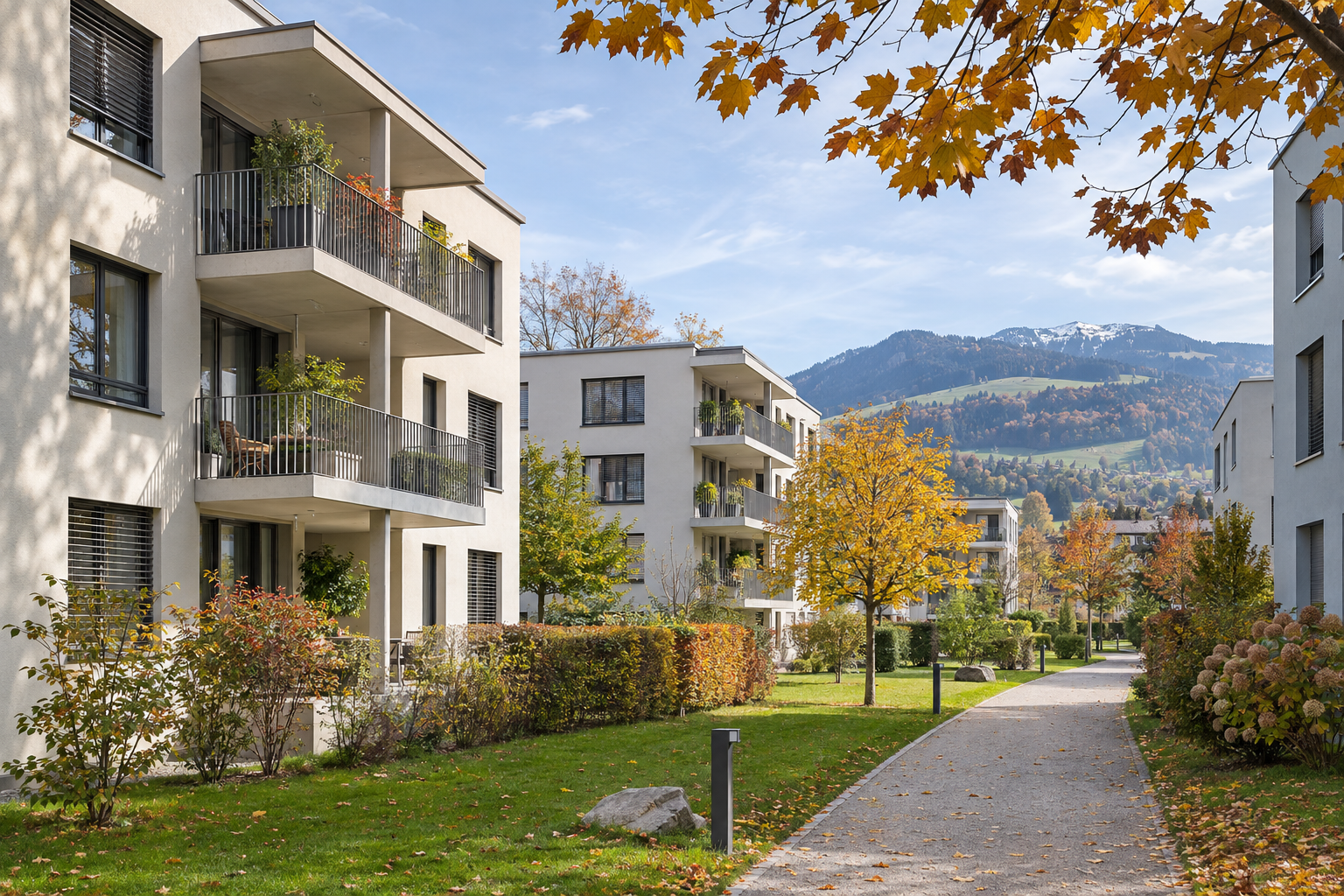
Patrimonium Asset Management announced on 2 November that it plans to combine Sustainable Real Estate Switzerland with the listed Patrimonium Swiss Real Estate Fund. The proposed combination would create a Swiss property portfolio with more than CHF 1.8 billion of assets under management. Exceeding CHF 2 billion also depends on executing the acquisition and development pipeline.
Subject to FINMA approval, Patrimonium would take over management of the SICAV on 1 January 2027. Its Switzerland sub-fund would then become a contractual property fund in the first half, before the planned summer merger. Conversion also requires shareholder approval.
The two vehicles would retain separate accounts at 31 March 2027 and make separate June distributions. Wüest Partner is proposed to value both portfolios at the March date. The receiving listed fund would retain its existing structure and performance history.
RAFT Analysis
Patrimonium’s proposed combination is a consolidation play in a Swiss housing market with already low vacancy. The case for greater scale is therefore more about portfolio breadth and operating efficiency than a large pool of empty homes waiting to be filled.
The Federal Statistical Office’s 10 September 2026 census release put Swiss dwelling vacancy at 0.93% on 1 June, down from 1.00% a year earlier. That national rental-market background is relevant to a combination including the predominantly residential Sustainable Real Estate Switzerland portfolio. The census covers Swiss dwellings offered for rent or sale; Zurich moved differently from six other regions. The sixth successive decline in national vacancy reinforces the income appeal of occupied residential stock. It also puts the merger’s proposed cost savings in sharper focus: the two portfolios are being combined into a tight housing market, rather than assembled for a broad lease-up recovery.
Sources
- Patrimonium Asset Management · Planned Swiss fund merger and staged 2027 approvals · November 2026
- Swiss Federal Statistical Office · Empty Dwellings Census 2026 · September 2026