
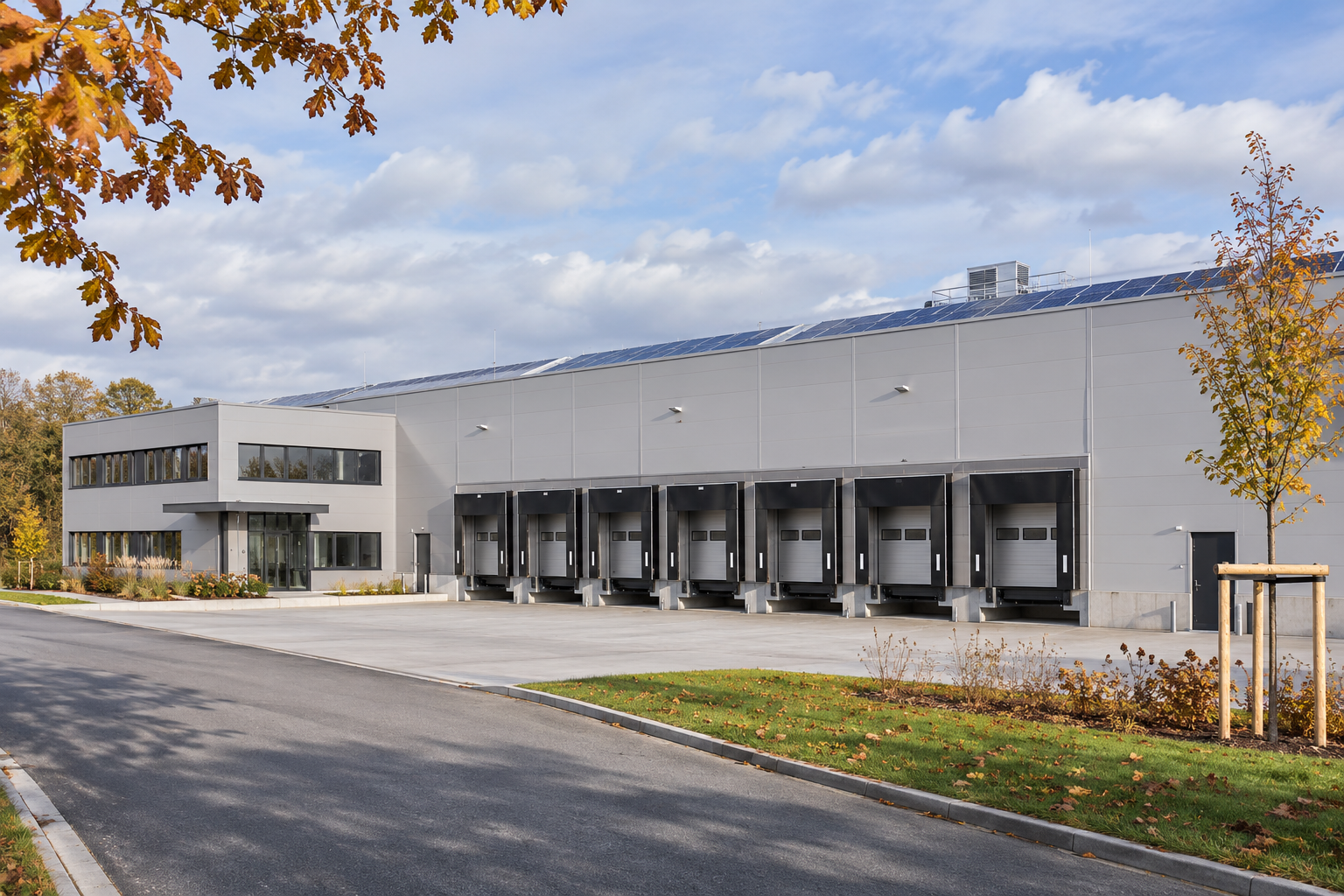
OUBO International GmbH has taken approximately 11,100 sq m at Im Gewerbepark 14 in Dötlingen, near Oldenburg. The company is the first occupier of the logistics building completed in 2026. The tenancy began in September; broker Robert C. Spies reported it on 13 November.
The total includes approximately 300 sq m of offices and staff space and 600 sq m of mezzanine space. Schewe-Immobilien of Dinklage developed the building with Goldbeck.
The broker describes KfW 40 efficiency, DGNB Platinum certification, photovoltaic generation, air-source heat pumps and electric-vehicle infrastructure. It also identifies technical provision for safe lithium-ion battery storage.
RAFT Analysis
OUBO’s first letting puts a newly built regional warehouse into occupation during a marked shift in German logistics demand away from the largest markets. Hockensberg is participating in the stronger regional side of that divide.
BNP Paribas Real Estate’s Q3 2026 report version updated on 23 October 2026 put German logistics take-up at about 5.5 million sq m over the first nine months, up 28% year on year. Take-up outside the seven largest markets rose 51%, while those seven markets fell 5%. Dötlingen is outside those largest markets, so the regional pattern is a closer demand reference than the national increase alone. The regional series aggregates several locations and occupier sectors. Take-up outside the seven largest markets rose 51% while the main hubs contracted 5%. OUBO’s commitment is a specific example of that geographic broadening, connecting a regional building to demand that the national growth rate alone understates.
Sources
- Robert C. Spies via ASSETPHYSICS · OUBO logistics letting in Hockensberg · November 2026
- BNP Paribas Real Estate · Germany logistics market Q3 2026 · October 2026