
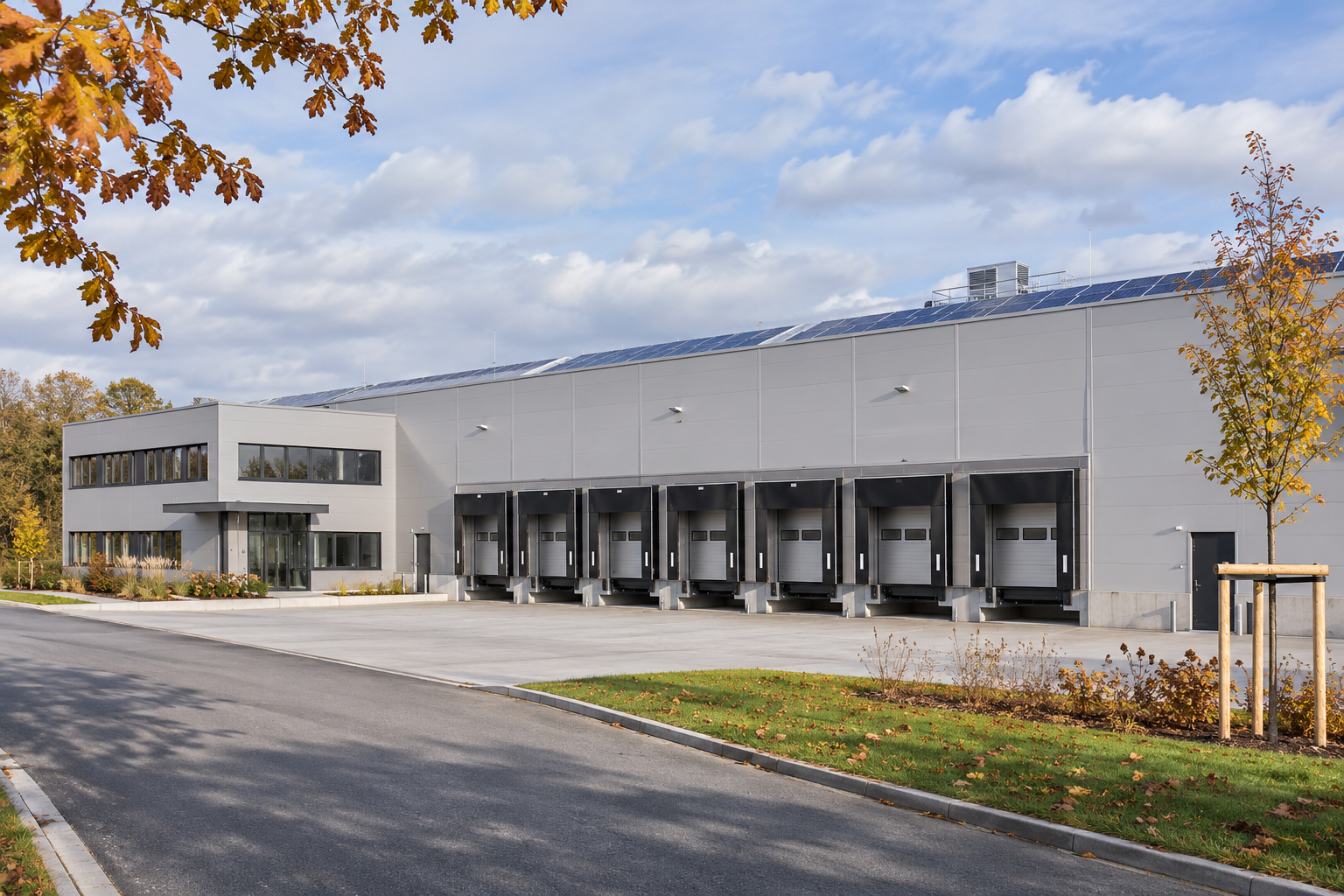
GARBE Industrial sold a fully let logistics property in Nittendorf, near Regensburg, to a UK-based investment company specialising in logistics. The seller’s 11 November announcement follows its achievement of full occupancy in 2025.
The building dates from 2000 and provides approximately 17,700 sq m, including 13,700 sq m of warehouse and handling space, on a site of about 33,400 sq m near the A3 motorway. Valveo acted as seller’s broker and Greenberg Traurig as legal adviser.
RAFT Analysis
Nittendorf adds a 2000-vintage regional warehouse to the foreign-led recovery in German logistics investment. GARBE has followed the completion of its letting programme with a sale, bringing a stabilised building back to market as transaction numbers recover. The UK purchaser’s interest extends beyond the newly built, prime assets usually used to describe logistics pricing.
BNP Paribas Real Estate’s Q3 2026 report, updated on 5 October, records just over €4 billion of German logistics transactions in the first nine months. Foreign investors supplied more than €3 billion, up about 5% year on year, and deal numbers stood 17% above their ten-year average. The Nittendorf buyer fits that cross-border resurgence, while the increase in deal numbers shows a recovery broader than a handful of large portfolio trades. The report covers national transactions across single assets and portfolios. Liquidity and pricing are moving at different speeds. BNP recorded a further 10-basis-point rise in prime yields to 4.70% at the main locations in Q3, even as transaction activity strengthened. GARBE’s exit illustrates the return of trading opportunities after letting work, within a market still adjusting its required returns rather than enjoying uniform capital-value growth.
Sources
- GARBE Industrial via ASSETPHYSICS · Nittendorf fully let logistics disposal · November 2026
- BNP Paribas Real Estate · Germany logistics investment Q3 2026 · October 2026