
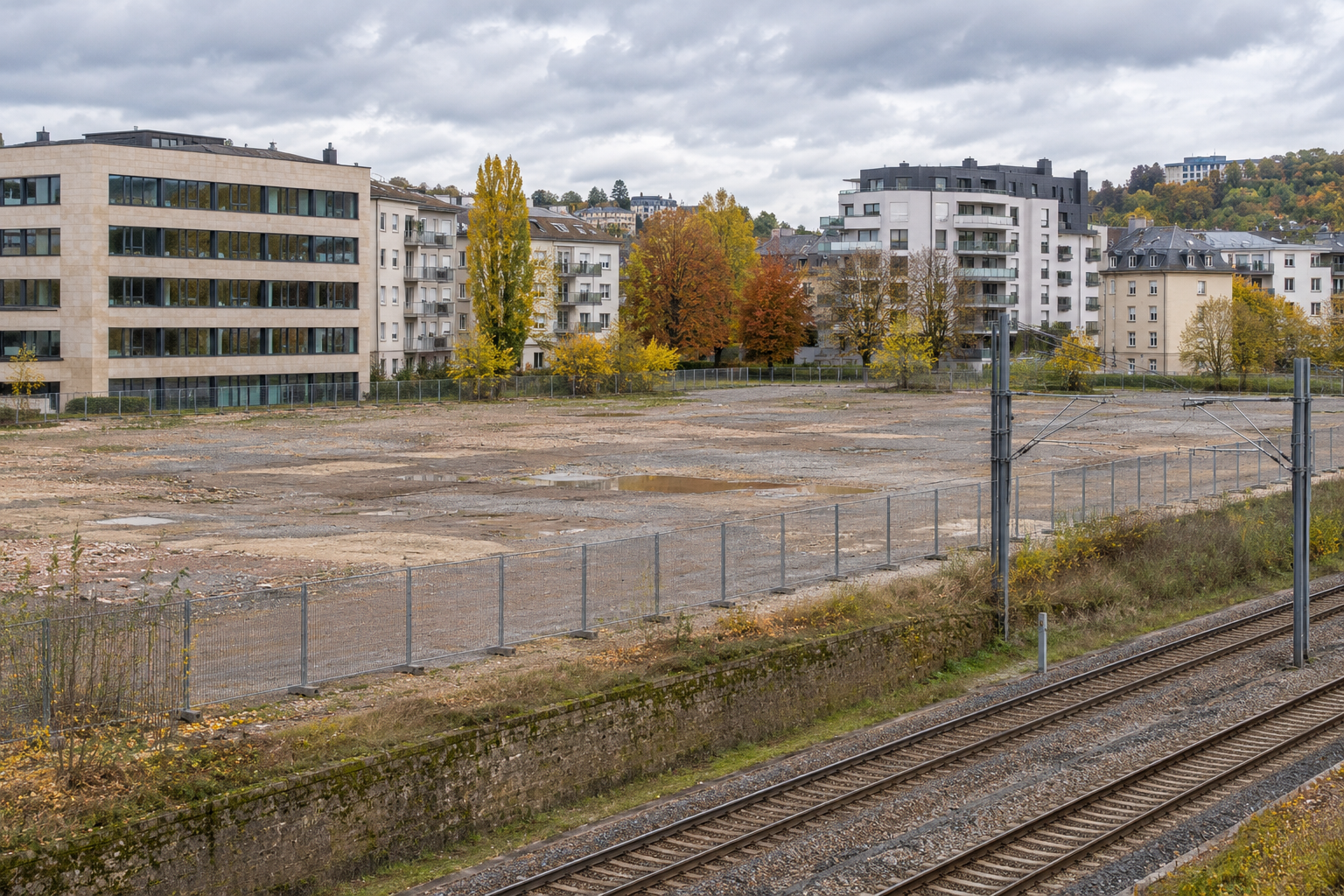
A consortium of Baltisse Real Estate and BPI Real Estate Luxembourg has signed a sale agreement with Paul Wurth Real Estate for the former industrial site between Rue de Hollerich and Rue Wenceslas Ier in Luxembourg City. BPI published the announcement on 11 November, carrying a 10 November dateline.
The proposed development comprises approximately 34,600 sq m of above-ground space across offices, housing and retail. A specific development plan was approved in 2023 and an implementation agreement in 2025. The former industrial halls were demolished in 2020; infrastructure works and a future tram extension form part of the wider district’s planned transformation. The announcement confirms an agreement, rather than completion of the land purchase or buildings.
RAFT Analysis
Hollerich advances as Luxembourg’s residential market sends opposing signals: new-flat asking prices are falling while advertised rents are rising. The planning agreement opens a sizeable mixed-use opportunity into a market where the route to exit matters as much as housing demand.
atHome.lu’s Q3 2026 report, published on 1 October, showed new-flat asking prices down 10.5% year on year, while advertised flat rents rose 3.8%. The divergence matters to the potential residential component: selling completed homes and retaining rental income face different market signals. atHome’s measures are national advertised prices and rents from different property groups. The divergence favours a closer look at rental-led strategies relative to selling new apartments into a weaker advertised-price market. It also explains why planning progress alone is an incomplete indicator of the project’s commercial direction: tenure will place its residential component on different sides of that market split.
Sources
- BPI Real Estate · Hollerich sale agreement and mixed-use plan · November 2026
- atHome.lu · Luxembourg Q3 2026 asking prices and rents · October 2026